
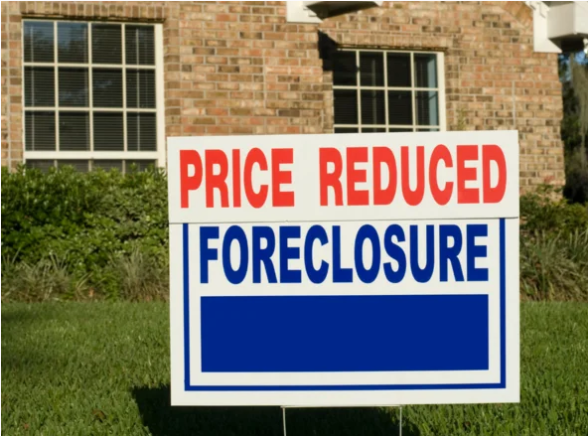
Is a foreclosed home actually a smart bargain, or does it just look like one? That's the real question most first-time buyers are sitting with when they start browsing distressed property listings. The lower prices are hard to ignore, especially when the standard housing market keeps pushing affordability further out of reach. But excitement is a poor substitute for caution here, and the buyers who come out ahead are the ones who treat this as a decision, not a discovery.
Hidden repair costs, title complications, financing hurdles, and the very real possibility of walking away mid-deal are all part of the foreclosure conversation. This guide is built around those concerns. It's not a glossary of foreclosure terms. It's a framework for deciding whether a specific property, at a specific price, in your specific situation, is actually worth pursuing.
The core idea is straightforward. A foreclosure's listing price is just the starting point. What matters is the total cost after repairs, legal cleanup, financing adjustments, and timeline delays are factored in. Buyers who focus only on the sticker price are the ones who end up surprised later.
Is This Deal Worth It for You
Before you search a single listing, the fastest reality check you can run is an honest look at your own financial position. A foreclosure can save you real money upfront, but only if the discount survives the full cost of getting the home livable, legally clean, and financed.
Your budget matters here, but so does what sits beyond it. Buyers who are well-positioned for foreclosure shopping typically have cash reserves beyond their down payment, some tolerance for renovation timelines, and flexibility around closing dates that may shift. If you need to be in a home by a specific month, or if your savings are fully committed to the down payment and closing costs, a foreclosure adds friction you may not have room for.
The contrast between buyer types is worth being direct about. Someone with a six-month buffer, comfort with a fixer-upper, and prior experience managing contractors is in a genuinely different position than a first-time buyer who needs a move-in-ready home and a smooth, predictable closing. Neither situation is wrong. They just call for different strategies.
For first-time buyers specifically, foreclosure shopping works best as a deliberate choice rather than a default one. If your primary goal is affordability, there are other paths worth comparing, including down payment assistance programs, FHA loans on standard resale homes, and HUD's Good Neighbor Next Door program for eligible buyers. Foreclosures can compete with those options, but only when the numbers genuinely hold up.
A simple way to test your fit is to ask whether you could absorb an unexpected $15,000 to $30,000 in repair costs after closing without derailing your finances. If that question creates real anxiety, foreclosure shopping should be a backup strategy, not the main one.
The Risks That Wreck the Bargain
A distressed property's biggest financial dangers rarely show up in the listing description. They show up after the offer is accepted, sometimes after closing.
Condition problems are the most immediate risk. Homes that sit vacant for months or years collect damage in ways that aren't always visible during a walkthrough. Deferred maintenance compounds quickly — a slow roof leak becomes a mold issue, an uninsulated pipe becomes a burst pipe, and a neglected HVAC system becomes a full replacement. Vandalism is also common in vacant properties, and in some cases, previous owners or occupants have removed fixtures, appliances, copper wiring, or plumbing components before leaving.
Buying as-is means the seller, often a bank or government entity, has no obligation to fix any of it. There's no negotiating for repair credits the way you might with a traditional seller. Whatever condition the home is in at the time of your offer is the condition you're accepting. That's not inherently a dealbreaker, but it does mean your inspection and contractor estimates carry more weight than in a standard purchase.
Seller disclosures are another gap. In a traditional sale, the seller is typically required to disclose known defects. In a foreclosure, the bank or institution selling the property often has no firsthand knowledge of the home's condition, which means disclosures may be minimal or nonexistent. Unknown defects become your problem the moment you close.
Title issues add a separate layer of risk. Foreclosed properties can carry unpaid property taxes, HOA dues, mechanic's liens from contractors who were never paid, and in some cases, unresolved ownership disputes. These don't always disappear when a property changes hands through foreclosure. Depending on the type of foreclosure and the state where the property is located, some liens can survive the process and transfer to the new owner. A title search before closing is non-negotiable, and owner's title insurance is what protects you if a problem surfaces after the fact.
For first-time buyers, the most common mistake isn't choosing a bad property. It's underestimating how many costs exist beyond the asking price. The discount needs to be large enough to absorb repairs, any title cleanup, carrying costs during renovation, and the extra time and paperwork that distressed purchases typically require.
The Safest Ways to Buy a Foreclosed Home
Not every foreclosure purchase looks the same, and the buying route you take often determines how much risk you're actually taking on.
Pre-foreclosure happens when a homeowner has defaulted but the lender hasn't completed the foreclosure process yet. Buying at this stage means negotiating directly with the owner, which can work out well, but it's also inconsistent. The owner may not be motivated to sell, the timeline is uncertain, and the transaction can fall apart if the lender doesn't approve a short sale in time.
Foreclosure auctions are the highest-risk option for most buyers. Properties are often sold without any opportunity to inspect them beforehand, and payment terms are strict — sometimes requiring full cash payment within 24 to 48 hours of winning the bid. Bidding on a home you haven't been inside is a significant gamble, and competition from experienced investors at auctions can push prices higher than expected.
Bank-owned or REO (real estate owned) properties are generally the most accessible route for traditional buyers. Once a lender takes ownership after a failed auction, the property is listed for sale, often through a real estate agent. The process can resemble a standard purchase more closely than other foreclosure routes, with a formal listing, time for inspections, and conventional or renovation financing potentially available depending on the property's condition.
HUD-owned homes are another option worth knowing about. These are properties that were financed with FHA loans and later went through foreclosure, with ownership transferring to the Department of Housing and Urban Development. HUD sells these homes through approved brokers, and owner-occupants get a priority bidding window before investors can participate. They're still sold as-is, but the process is more structured than an auction.
The buying route shapes nearly everything else about the transaction. Choosing the path that matches your experience level and financial position is one of the most capable decisions you can make early in this process.
How to Check a Property Before You Offer
Confirm the property's ownership status and stage in the foreclosure process before getting emotionally invested in any listing. A home that appears to be bank-owned may still be tied up in court proceedings, or the ownership may not have fully transferred yet. Verifying this early saves time and prevents you from building plans around a property that isn't actually available.
Vacancy history is one of the most telling indicators of repair risk. A home that's been empty for six months carries different risks than one that's been vacant for two years. Longer vacancies tend to mean more accumulated damage, greater pest exposure, and higher uncertainty around systems that haven't been used or maintained. Check county records, ask the listing agent, and look at utility connection history if you can access it.
Comparing the property to nearby move-in-ready sales is how you measure whether the discount is real. If a foreclosed home is listed 20% below market but needs $40,000 in repairs, the math may not favor you. Pull recent comparable sales in the same neighborhood and run the numbers honestly before making an offer.
When inspection access is available, take it seriously. Hire an independent inspector, not one recommended by the seller or listing agent. A thorough inspection should cover the roof, foundation, HVAC, plumbing, electrical, and any visible signs of water intrusion or structural movement. If the property has damage that the inspector flags, follow up with contractor estimates before submitting your offer. Guessing at repair costs is how buyers end up underwater.
Title review is equally important. A title company or real estate attorney can search for outstanding liens, unpaid taxes, HOA arrears, and unresolved ownership claims. Owner's title insurance, which is separate from the lender's title policy, protects you specifically if a title defect surfaces after closing.
Checking insurance availability is a step many first-time buyers skip. Properties with documented water damage, long vacancy histories, or flood zone exposure can be difficult or expensive to insure. If a standard homeowner's policy isn't available or comes with prohibitive premiums, that changes the cost calculation significantly.
How Financing Changes the Whole Decision
Getting pre-approved before you start shopping isn't just a formality — it's an early filter that can rule certain properties in or out before you spend time on due diligence.
Many foreclosed homes don't qualify for conventional financing because of their condition. Lenders won't approve a mortgage on a property that lacks functioning systems, has significant structural damage, or doesn't meet minimum habitability standards. If you're planning to use a standard 30-year conventional loan, the home needs to be in reasonable shape to appraise and qualify.
When a property needs significant work, renovation loan programs are worth understanding. The FHA 203(k) loan allows buyers to finance both the purchase price and the cost of repairs in a single loan, which can make a distressed property more accessible. Fannie Mae's HomeStyle Renovation loan and Freddie Mac's CHOICERenovation loan offer similar structures for buyers who qualify for conventional financing. These programs are genuinely useful, but they come with added complexity — contractor approval requirements, draw schedules, and longer timelines are all part of the process.
Cash reserves beyond your down payment and closing costs are not optional in a foreclosure purchase. Lenders, inspectors, and experienced buyers will all tell you the same thing: unexpected costs show up. Whether it's a repair the inspection missed, a delay that extends your carrying costs, or a title issue that requires legal resolution, having a financial cushion is what keeps a manageable problem from becoming a crisis.
Treating financing as a final step is a mistake. Your loan type, your lender's experience with distressed properties, and your reserve position all shape which foreclosures are realistic options for you and which ones aren't worth pursuing regardless of the price.
How to Make an Offer Without Walking in Blind
Offers on foreclosed properties work differently than offers on homes with traditional sellers, and knowing that going in keeps you from being caught off guard.
Banks and government entities selling foreclosed homes are focused on process and loss recovery. They're not emotionally attached to the property, and they're not going to negotiate the way a motivated homeowner might. Responses can take days or weeks, paperwork requirements are often more extensive, and addendums or counter-offers may come back in formats that feel more transactional than conversational. That's normal.
Contingencies still matter, even when sellers push back on them. The ones worth protecting are your inspection contingency, your financing contingency, and a clear title contingency when the contract allows for it. These give you a defined exit if something disqualifying turns up during due diligence. Waiving them to make your offer more competitive is a risk that rarely pays off for first-time buyers.
Earnest money terms deserve attention before you sign anything. Some institutional sellers have strict deadlines and non-refundable deposit rules that differ from what you'd see in a standard purchase contract. Know exactly what triggers a forfeiture of your deposit and what your rights are if the deal falls through on the seller's end.
Making an offer based on actual numbers rather than the feeling that you've found a steal is what keeps the process grounded. Calculate your maximum offer after subtracting estimated repair costs, financing adjustments, and a buffer for surprises from the property's fair market value. If the math works at that number, make the offer confidently. If it doesn't, the discipline to walk away is one of the most capable moves you can make.
When to Move Forward and When to Walk Away
Knowing when a foreclosure deal is worth pursuing comes down to a few clear signals on both sides of the decision.
Signs that a deal is worth moving forward on include a meaningful discount that holds up after repair estimates, a property condition that's manageable rather than overwhelming, a title that's clean or has fixable issues, financing that fits the property's condition, and enough reserves to handle surprises without financial strain.
Signs to walk away include no inspection access before the offer deadline, a title with unresolved ownership disputes or liens that exceed the discount, major structural damage that contractors estimate will cost more than the price reduction justifies, and a budget with no cushion for unexpected costs. A small discount on a high-risk property is not a bargain. It's a transfer of someone else's problem.
A straightforward example shows how fast the math can shift. A home listed at $180,000 in a neighborhood where comparable homes sell for $220,000 looks like a $40,000 discount. But if the roof needs replacement at $15,000, the HVAC system is non-functional at $8,000, there's water damage requiring remediation at $12,000, and title cleanup costs another $3,000, the actual savings drop to $2,000 before accounting for any financing adjustments or carrying costs during renovation. That's not a deal. That's a break-even situation with significant risk attached.
Foreclosure activity has risen in 2026, but the context matters. This is closer to a return toward historical norms following years of pandemic-era forbearance than it is a market collapse. Buyers who stay selective and patient are in a stronger position than those who rush because inventory looks higher than it did a few years ago.
Wise foreclosure buyers buy the math, not the excitement around a listing price.
Final Thoughts
A foreclosed home can be a smart purchase, but the word "can" is doing real work in that sentence. The deal has to survive inspection, title review, financing qualification, and an honest repair estimate before it earns that label.
Some foreclosure paths are far more manageable for first-time buyers than others. REO properties and HUD homes offer more structure and access than auctions, which remain the highest-risk route regardless of how attractive the opening bid looks. Choosing the right buying path is just as important as choosing the right property.
Due diligence is the actual work that separates a genuine opportunity from an expensive mistake. Skipping the title search, guessing at repair costs, or waiving the inspection to move faster are the decisions that tend to define bad outcomes. The buyers who do well in this space are the ones who slow down when the pressure to act quickly builds.
Getting contractor estimates before making an offer, working with a real estate attorney on title review, and confirming your financing options before falling in love with a listing are all steps that keep you in control of the process rather than reacting to it.
Walking away from a deal that doesn't hold up isn't a failure. It's the outcome of doing the work correctly. The goal was never to buy a foreclosure. The goal was to buy a home that makes financial sense, and sometimes those are the same thing, and sometimes they aren't.
Check out this article next